




Updated. Originally published December 11, 2024
Preparing for an event or trade show is stressful enough; if it’s your first-time, things can be even more puzzling for you. From setting up your booth or canopy tent to ensuring your brand stands out, every single detail plays a tremendous role. Among all things, the most important decision to be made is the canopy tent you choose.
Your tent isn’t just a shelter; it’s your brand’s first impression and the space where you’ll connect with your potential customers. Thus, you need a reliable and professional-looking shelter that reflects the quality of your brand. But among many options for pop-up tents, you can’t decide which one is the best for your business: a straight- or slant-leg canopy tent.
For business owners and markets, the tent is for more than aesthetics; it’s about reliable brand presence, stability, and getting the best return on your investment. Choosing the wrong tent can leave an unprofessional impression on your visitors, which can also harm the credibility of your brand.
That’s why making a well-informed and wise decision is a must. This comprehensive guide will help you cut through the noise, providing you with a clear, authoritative answer. We’ll break down the pros and cons of each type of tent, focusing on how they align with your professional and commercial needs to help you confidently decide which one is truly the best option for your business.
What Is a Straight Leg Canopy?

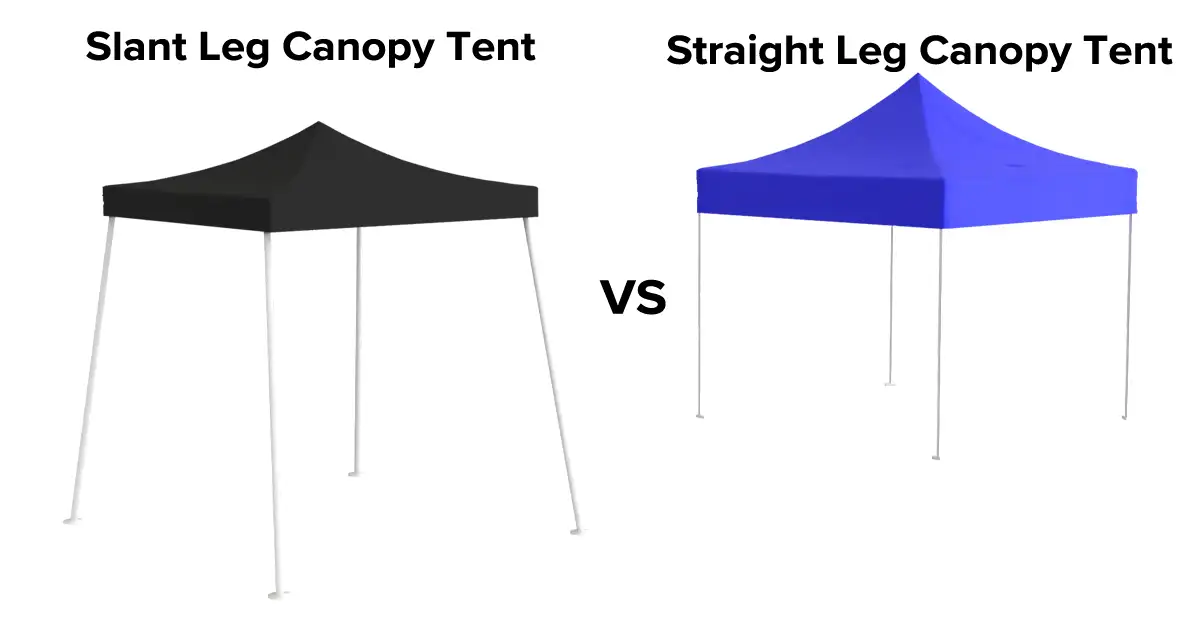
A straight-leg canopy is a tent designed with vertical legs that stand on the ground perpendicularly at a 90-degree angle, forming a perfect square or rectangle. This design gives you maximum shade coverage and provides you with unmatched structural stability.
Imagine you’ve set up a booth at an outdoor farmer’s market. To protect yourself and your visitors from the sunshine and other elements, you’ll need a full-coverage tent that provides reliable stability to you if the wind picks up.
The special feature of a straight-leg canopy tent is its vertically positioned legs, which evenly extend the canopy fabric over the entire frame, giving you full coverage. For instance, a 10×10 straight-leg canopy gives you a complete 100 square feet of shaded space. Because of this, it makes an ideal canopy design for professional use, commercial displays, and events that require a polished and structured look.
Furthermore, this waterproof pop-up canopy tent is made using heavy-duty steel or aluminum frames, thicker truss bars, and UV-resistant, water-repellent fabric, making it durable and stable for both rough outdoor conditions and long-term use.
Key Characteristics:
- Offers maximum shade coverage.
- More stable and wind-resistant.
- Professional appearance.
- Compatible with accessories like sidewalls, banners, and weights.
What Is a Slant Leg Canopy?
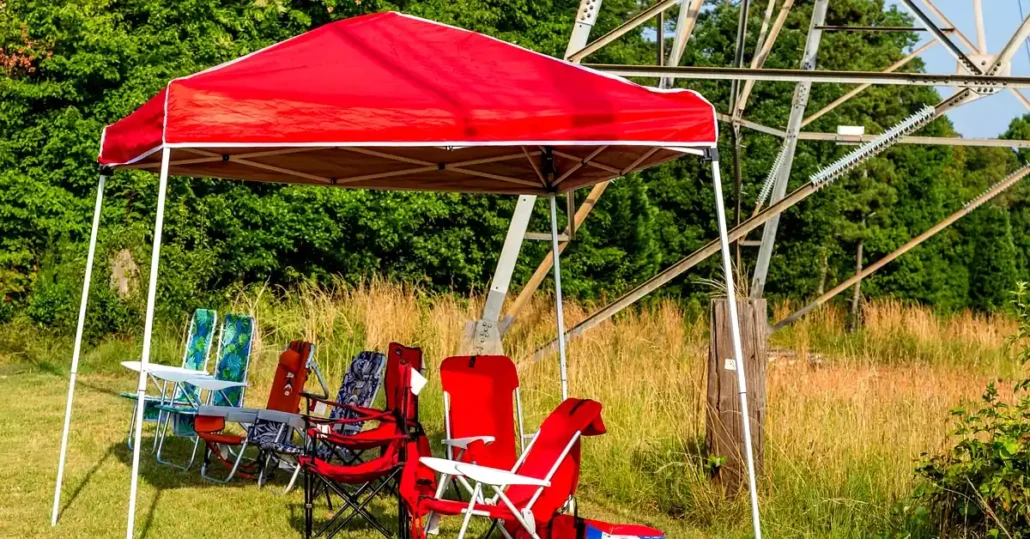
A slant-leg tent has legs that are angled outward, forming a wider base than the top canopy fabric. This design gives it a sleek, modern appearance that makes it perfect to use in recreational settings like beaches, parks, and backyard events.
Think of it as the canopy you’d take for a weekend picnic with your friends and family rather than a trade show. It’s lightweight, simple to carry, and quick to set up. However, the slanted design means it covers less area than a straight-leg canopy of the same size.
For instance, a slant-leg 10×10 canopy tent trade show booth will only provide coverage of up to 64 square feet. This is because the angled legs reduce stability slightly, especially in windy conditions. However, they are still excellent to use for a more stylish and compact look.
Key Characteristics:
- Lightweight and easy to transport.
- More affordable.
- Stylish, modern look for casual setups.

Straight Leg vs Slant Leg: Key Differences Explained
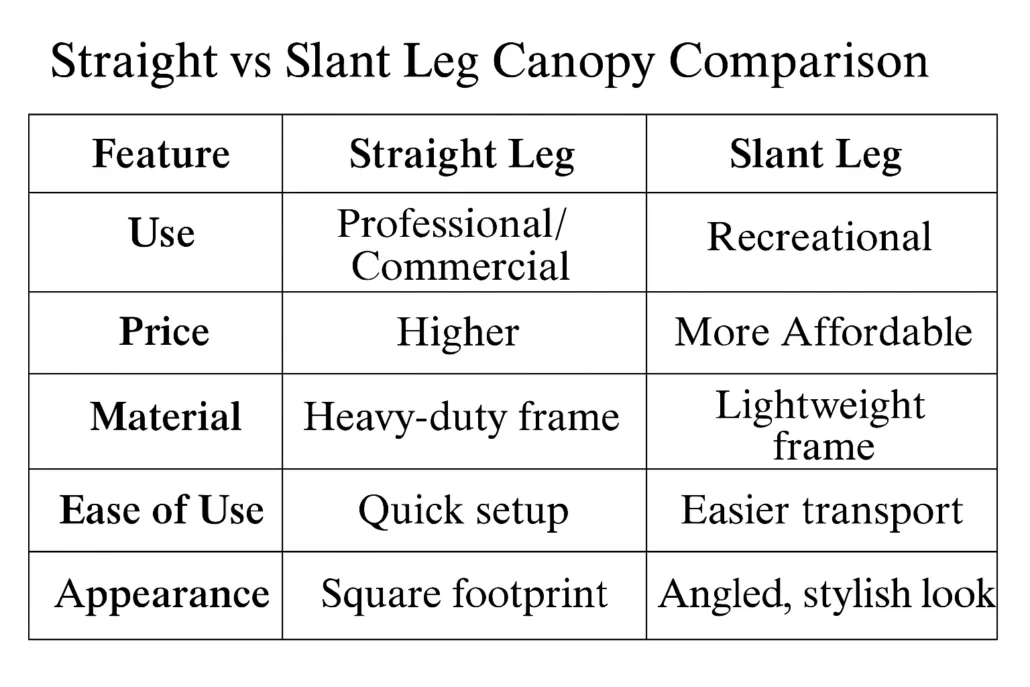
There is a tremendous difference between a straight-leg canopy tent and a slant-leg canopy tent. The very apparent ones are the appearance, size, and durability. Let’s dive deep into some of the most important factors that set them apart so you can choose the one that best suits your event needs and budget.
Mainly, straight-leg tents are preferred for commercial and professional events due to their structural integrity and full coverage. Meanwhile, slant legs are considered wonderful for personal, recreational activities where quick setup and portability matter more than the total coverage.
Are you ready to invest in a premium, professional-grade canopy that perfectly represents your brand? Contact us for a custom quote on a commercial straight-leg canopy tent that meets your exact specifications and branding needs.
Canopy Features That Matter Most
Before deciding which vendor tent to purchase for your business, understand the most essential features that influence the quality, functionality, and longevity of the canopy tents.
Size
The size of your canopy tent is one of the most important factors to consider when purchasing. If you’re a small business that doesn’t need a large display or has a limited booth space, you can work with a smaller canopy. However, bigger businesses may require larger display booths; hence, a larger canopy is needed.
A straight-leg canopy tent maintains its full dimensions throughout, offering more usable interior space to you. In contrast, slant-leg tents lose a portion of their coverage area due to their angled legs.
So, if you’re planning to host clients, display merchandise, or accommodate multiple visitors, go for the larger and more efficient straight-leg design. For at-home recreational purposes, you can invest in a slant-leg one.
Material
The quality of the materials used in your canopy tent will decide how long your investment will last. High-quality frames, sturdy joints, and durable canopy fabric can withstand repeated use and harsh weather conditions without getting damaged, ensuring you get the best value for money for your business.
Look for aluminum frames, as they’re lightweight and corrosion-resistant, making them ideal for easy transportation. Steel frames offer more strength and stability but are heavier; if weight isn’t a constraint for you, you can also go for them. For fabric, opt for UV-resistant polyester or coated Oxford cloth for maximum protection for both your team and visitors.
Ease of use
Trade shows are hectic. From ensuring your display looks perfect to managing last-minute logistics, there’s always a lot happening. Among all this chaos, although crucial, the last thing your team would want to deal with is spending hours setting up the tent. Although tents must be set up safely, this process should be quick and intuitive.
While both straight-leg canopy tents and slant-leg tents have pop-up mechanisms, slant-leg tents are slightly easier to assemble and move. On the other hand, straight-leg designs may require more effort to set them up due to weight, but they offer more structural rigidity once set up. That’s why straight-leg canopies are often preferred for business events and trade shows.
Appearance
A straight-leg tent’s clean, vertical lines give your business event or trade show exhibits a professional “storefront” aesthetic. While slant-leg tents’ relaxed, angled look can look informal and more suitable for casual outdoor events like fairs, beach outings, or family gatherings.
If you’re aiming for a polished, brand-forward presence that reflects professionalism and reliability, a straight-leg canopy is the perfect choice for you. It’ll enhance your booth’s visual appeal while showcasing your brand identity and creating a stable and spacious environment for your visitors.
Portability
While slant-leg tents are generally lighter, a high-quality straight-leg canopy, especially one made using an aluminum frame, is portable. If your straight-leg canopy has a steel frame, it can be a little heavy, making it slightly effortful to travel with. Many professional tents include wheeled bags to manage the canopy tent weight effectively and travel effortlessly to different trade show venues. Furthermore, when choosing a canopy tent, don’t let portability compromise you on the stability, quality, and durability of the tent.
Price
One of the main distinctions in the straight vs. slant leg canopy tent debate is cost. Slant-leg tents are more affordable, making them a good starting point for casual customers. But if you need a long-term solution for your business with professional-grade quality and performance, straight-leg canopies justify their price through durability and reliability. Plus, these straight-leg tents are a one-time investment that can give you excellent results for years.
Why Are Slant Leg Canopy Tents More Affordable?
If you’ve been hosting trade shows for a while now or venturing out to purchase a tent for your next business event, you must have noticed that slant-leg canopy tents are significantly cheaper than their straight-legged counterparts—and for a good reason.
The angled design of the slant-leg tents requires less material, which reduces their manufacturing cost, making them less costly. Additionally, slant-leg canopies often feature thinner frames and joints that make them lighter but less robust.
However, while the price tag of these tents may look attractive upfront, it’s essential to consider long-term value. For instance, if you’re running a food stall, a farmers’ market booth, or any commercial setup where your canopy faces frequent use, a straight-leg canopy will outperform and outlast a slant-leg version by years.
It’s a one-time investment rather than a recurring expense. Paying slightly more initially will pay you off in the long run, ensuring consistent performance, stability, and fewer replacements.
Final Verdict: Straight vs Slant Leg Canopy
So, which is the right choice—straight leg or slant leg?
If you’re a business owner, vendor, or brand representative attending outdoor events regularly, a straight-leg canopy tent should be your go-to. It offers the space, strength, and dependability you need for professional settings.
But if you’re shopping for personal use—like family picnics, weekend outings, or beach trips—a slant-leg tent provides excellent convenience without overcommitting on cost or setup time.
Your final decision depends on how often you’ll use the tent, the environments you’ll face, and the level of professionalism you want to showcase.
Explore our range of commercial-grade straight-leg canopy tents today, and Download our “Commercial Canopy Buyer’s Guide” to ensure your next investment is the right one.
FAQs
Which is better: a straight leg canopy or a slant leg canopy?
It purely depends on your needs. Straight-leg canopies are ideal for professional events and frequent use, while slant-leg ones suit light recreational activities the best.
Which canopy tent offers more stability and coverage?
A straight-leg canopy tent provides superior stability and 100% coverage due to its vertical frame structure.
What are the advantages of a slant leg canopy?
A slant-leg canopy tent is lightweight, budget-friendly, and visually appealing, making it perfect for personal outdoor gatherings.
Should I pick an aluminum or steel frame canopy?
Choose aluminum if you value lightweight portability and rust resistance. If you need extra strength for windy conditions, you can go for steel.
Which canopy color keeps you the coolest?
Lighter colors like white, beige, or light gray reflect sunlight better, keeping your canopy cooler during hot weather.
What should I look for when buying a pop-up canopy tent?
Focus on durability, frame quality, fabric thickness, portability, and ease of setup. Also, ensure the canopy suits your intended use, like recreational or business purposes.
More Resources For You: